
Brown & Brown says AI will automate 25% of submission workflows without replacing employees
Brown & Brown shared new details about its AI strategy during its Q1 2026 earnings call, outlining how the brokerage is using automation across underwriting, policy review, and billing workflows while emphasizing that the technology is intended to support employees rather than replace them.
The brokerage said its technology and data strategy began more than a decade ago with platform rationalization and data standardization efforts designed to support future AI deployment. Today, the company is focused on using AI to improve customer interactions, increase sales velocity, and reduce repetitive manual work.
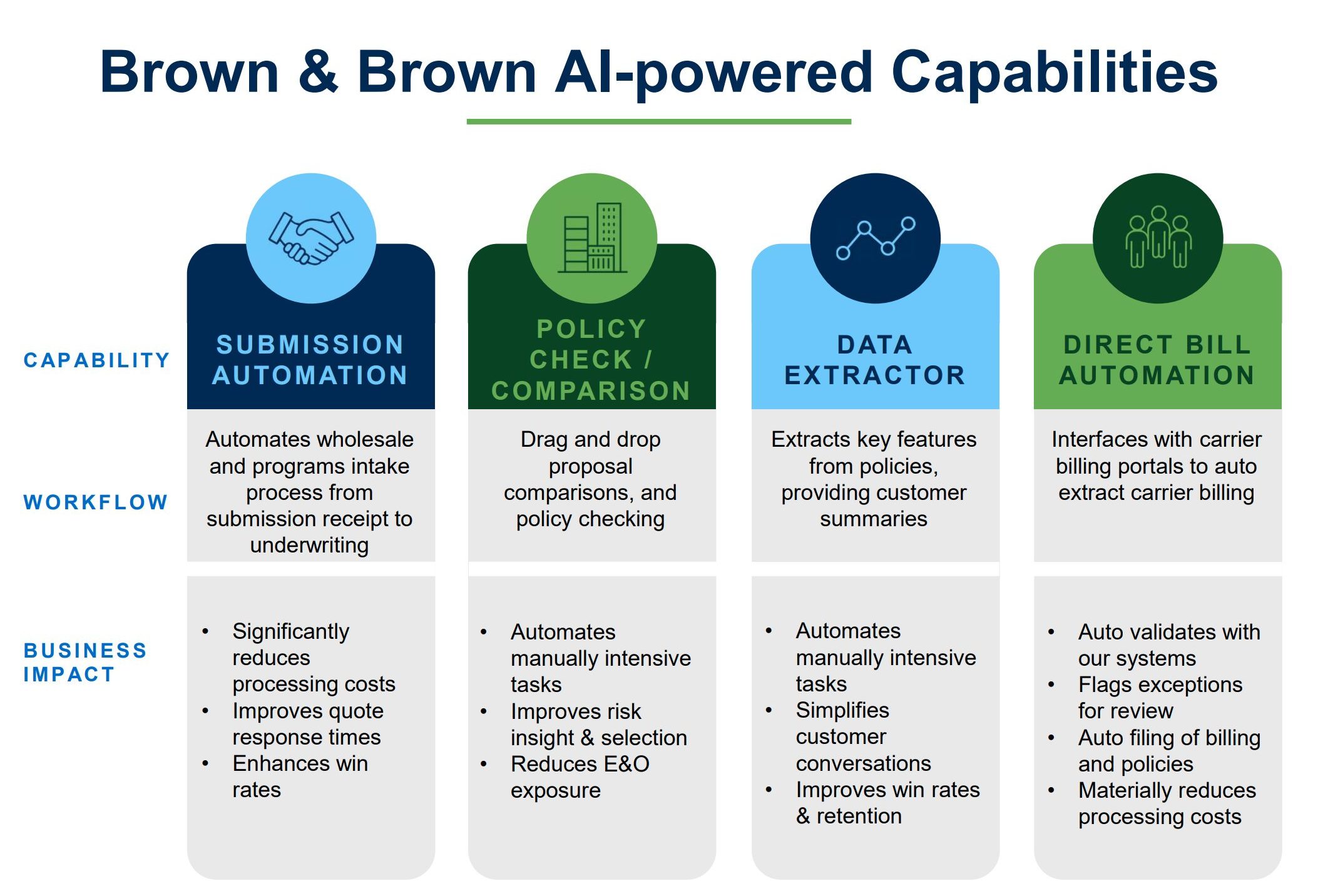
Brown & Brown said it is already deploying AI agents across parts of its specialty distribution operations. According to the company, the tools are expected to automate more than 25% of the end-to-end submission process for many wholesale and program businesses, helping remove throughput limits and speed up underwriting workflows.
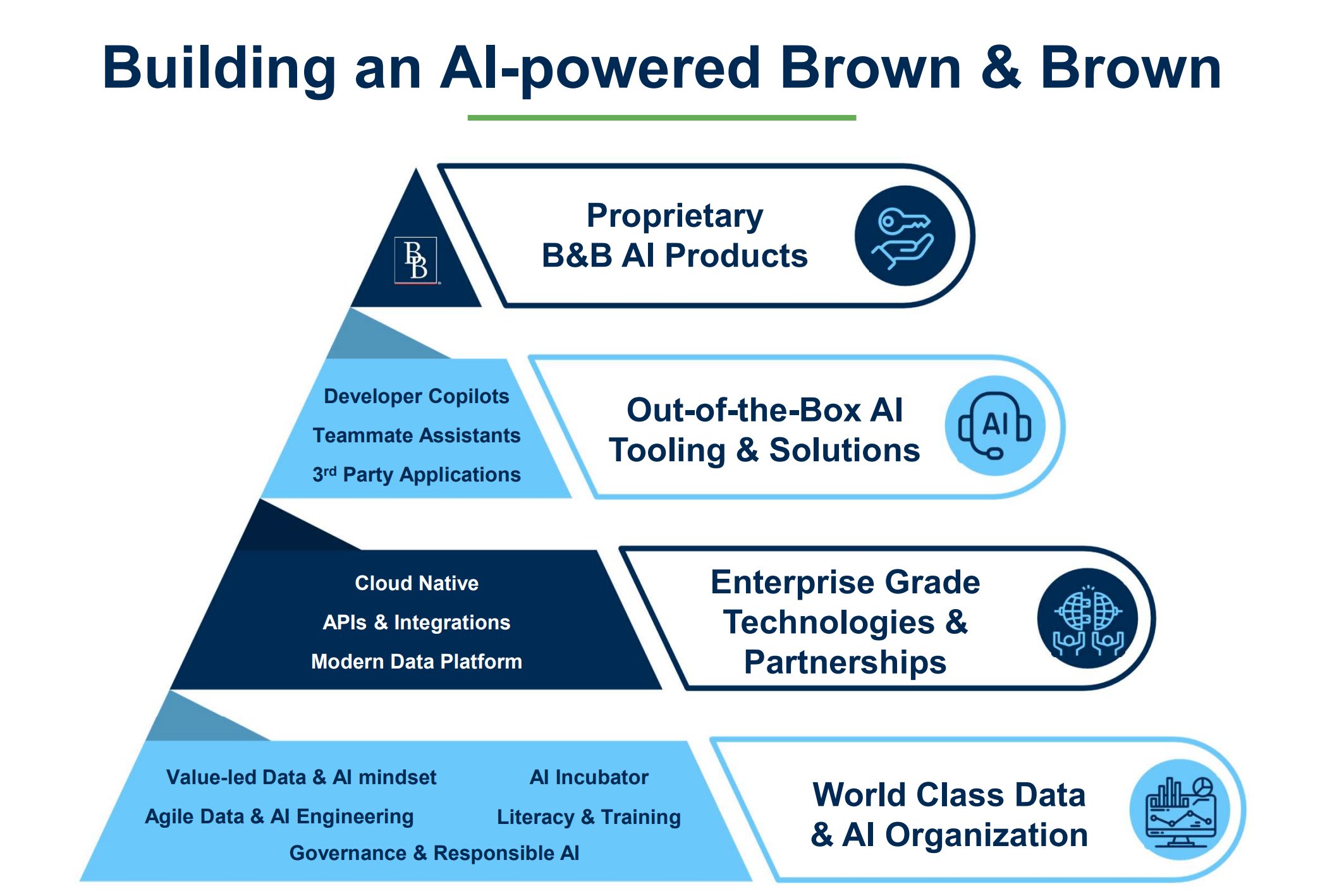
The company also highlighted AI-powered policy checking agents that automate proposal comparisons and policy reviews, as well as systems that summarize complex policies for customers. In another example, Brown & Brown said it built a proprietary platform that interfaces with carrier billing portals and automates billing data extraction and validation, saving more than 50,000 hours annually.
Executives positioned AI as a growth and productivity tool tied closely to the brokerage model. “We don’t view AI as a teammate replacement tool,” CEO Powell Brown said during the call.
Brown also argued that AI is more likely to strengthen brokers handling complex risks rather than disrupt them, especially in middle market and specialty insurance. “AI does not disintermediate trust. And so our business is built on trust and good advice,” he said.
The company reported Q1 2026 revenue of $1.9 billion, up 35.4% year-over-year. Organic revenue growth including contingents increased 2.2%, while CAT property pricing pressure and lower flood claims processing revenue weighed on results.