

The Plaintiff Bar Brought AI to the Claim File. Carriers Should Arm the Adjuster.
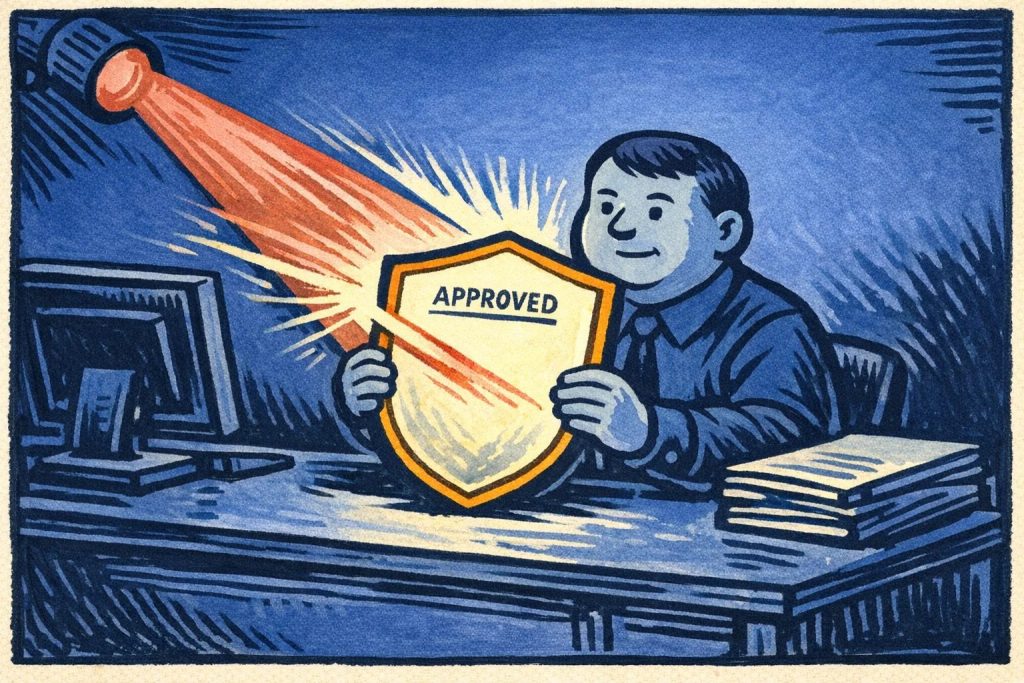
Every letter an adjuster sends is a legal act performed on behalf of the carrier. A reservation of rights, a partial denial, a status update, a closing letter: each one fixes the carrier’s position, lands in a file that is discoverable in litigation, and is read later by a regulator or opposing counsel looking for the seam. For decades, the practical protection against that exposure was obscurity. The rules were dense, the files were many, and no plaintiff’s firm had the time to audit each letter for the one missed deadline or the one wrong word. That protection is gone. The other side now has AI, it is well capitalized, and it is pointed directly at the part of the claim process carriers have automated the least.
We mapped the complexity, and it’s significant
Over the past several weeks my team published a seven-part field study covering 156 city pages, pairing each city’s operative state claims-handling rule with the local hazard and industry profile that actually drives its files. The installments ran as Part 1, Part 2, Part 3, Part 4, Part 5, Part 6, and Part 7. The exercise was meant to document complexity. What it documented instead was asymmetry. From Honolulu to Portland, Maine, Anchorage to Miami, the rule that controls a letter is rarely the same as the state next door, and a surprising share of these rules punish you for omission or for a single wrong word, silently, with no error message until litigation.
A few examples from the series make the point better than any abstraction. In Aurora, Illinois, the suit-limitation clock tolls from the filing of proof of loss until the claim is denied in writing, so a carrier that never sends a closing letter leaves its own limitations defense suspended indefinitely (215 ILCS 5/143.1). In St. Paul, Minnesota, the proof-of-loss deadline only begins to run if the demand goes out by certified mail, return receipt requested, which means the envelope, not the letter, is the trigger (Minn. Stat. § 65A.296). In Fayetteville, Arkansas, a status update that says only “still investigating,” without stating the specific reason for delay, is treated as no notice at all. In Charleston, South Carolina, a reservation of rights that omits exact policy quotations can estop the carrier from asserting the very coverage defense it thought it had preserved (Harleysville Group Ins. v. Heritage Communities, 2017). None of these failures looks like a failure on the day it happens. Each one is a clean, documented loss eighteen months later. The Claims Correspondence Compendium exists because that pattern repeats in all fifty states, and no human carrying a real caseload can hold it in their head.
Plaintiffs industrialized compliance audits
Here is the shift that should reframe the urgency. The plaintiff bar is no longer auditing letters by hand. It is doing it with AI, at volume, with venture money behind it. EvenUp, which builds AI demand packages, drafts litigation documents, and assembles medical chronologies for personal injury firms, raised a $150 million Series E in October 2025 at a valuation north of $2 billion. The company reports it works with more than 2,000 firms, including a fifth of the hundred largest personal injury practices, has touched more than 200,000 cases and over $10 billion in recoveries, and roughly doubled its volume in six months to about 10,000 cases a week. That is one vendor.
This is not happening in a vacuum. Third-party litigation funding is now roughly a $17 billion global industry, more than half of it deployed in the United States, and the Insurance Information Institute and the Casualty Actuarial Society have attributed some $20 billion in commercial auto liability costs from 2010 to 2019 to social inflation, both figures collected on the NAIC’s own social inflation page. Capital, tooling, and incentive have converged. A plaintiff-side model can ingest a claim file and flag the missing certified-mail trigger, the boilerplate reservation of rights, or the undocumented partial denial in seconds, then build the bad-faith narrative around it. Manual correspondence against an automated adversary is not a fair fight. It is the soft target.
AI that decides is a liability. AI that drafts is leverage.
The reflexive answer, to let AI run the claims decision itself, is the wrong one, and the same forces make it dangerous. In Estate of Lokken v. UnitedHealth Group, still pending in federal court in Minnesota, plaintiffs allege that the insurer leaned on an AI tool to deny Medicare Advantage claims over clinical judgment, pleading breach of the covenant of good faith and fair dealing and insurance bad faith. Whatever its outcome, the case signals where discovery is heading: when an algorithm makes the call, the algorithm becomes the exhibit. The NAIC’s Model Bulletin on the use of artificial intelligence points the same direction, holding that insurers remain accountable for outcomes and that human oversight stays central to claims decisions.
So the goal is not to remove the adjuster from the letter. The adjuster is the licensee, the one who answers for the file, and the only party who can weigh the facts against the policy and the statute. The goal is to remove everything around the letter that has nothing to do with judgment: the template hunting, the reformatting, the manual assembly of standard language, the version sprawl. That work consumes the adjuster’s hours and, worse, consumes the attention that the hard calls actually require.
Complexity is the adjuster’s problem. Drafting speed is the lever.
This is the case I would make to any claims leader weighing where to put AI. You will not buy your way out of complexity with a bigger template library or a central “letters desk,” because the rules change by city, by hazard, and by line, and the volume only grows. What you can change is how long it takes to get a defensible letter drafted and out the door. That is the principle Voltaire is built on: a drafting layer that collapses the burden so a task that ran the better part of an afternoon runs in minutes, cutting correspondence cycle time by as much as 90 percent and handing adjusters back hours each day.
The time saved is not the prize. It is the means. Fewer letters go out with mistakes, not because software adjudicated the rule, but because the person responsible for the rule finally had the bandwidth to apply it. That is what real AI in claims looks like. It sits next to the adjuster at the moment of adjudication, takes the tedium, leaves the judgment with the human, and earns the trust of the people who actually use it. It is the opposite of a black box that decides in the background and waits to become a deposition exhibit.
What the industry should do next
The plaintiff bar has already made its move, and it made it on the correspondence layer, because that is where carriers were slowest to modernize and most exposed when they got a word or a date wrong. The carriers that endure this paradigm will not be the ones with the most adjusters or the strictest template manuals. They will be the ones who put capable AI on their own side of every letter, matched in speed to what they are now up against, while keeping a human in the chair where the law and the regulators expect one. Summarizing the file faster was never the contest. The contest is the letter, and the other side showed up with better tools. It is time to arm the adjuster.
See it on your own claims. Voltaire turns a compliant, jurisdiction-aware letter from an afternoon’s work into minutes and leaves the judgment with your adjuster. Request a demo.