

Buying Claims AI Is the Easy Part. This is How Two Claims Organizations are Making It Stick.
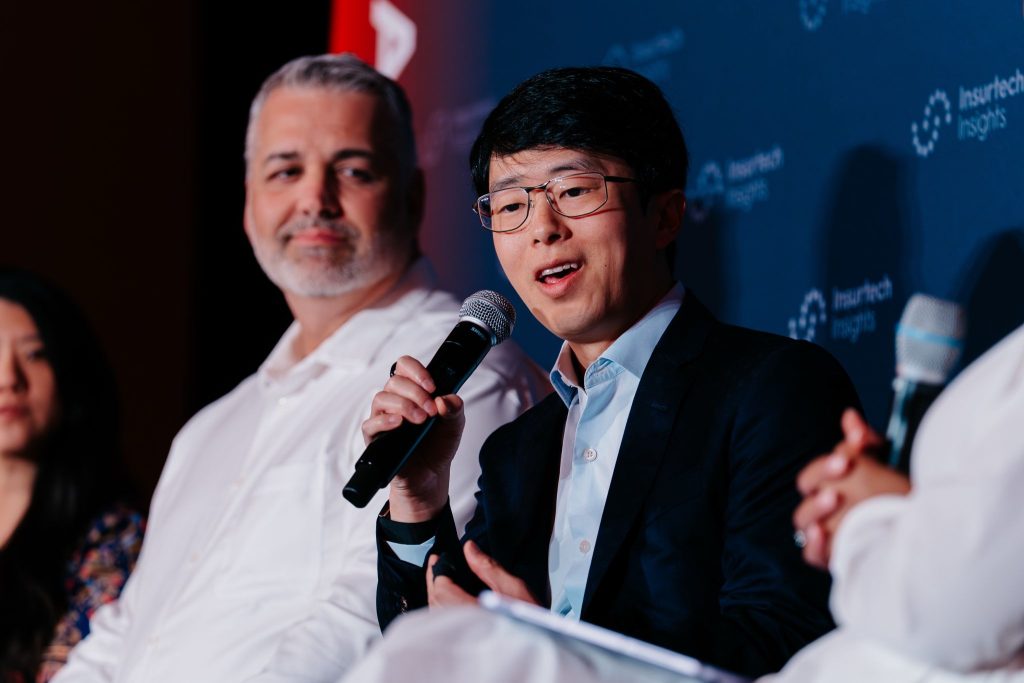
Most conversations about AI in claims still treat the purchase as the hard decision. It is not. The hard part begins the morning after the contract is signed, when an experienced, accountable adjuster decides whether to open the tool or quietly route around it. I have spent the past year on stages and panels with the claims leaders who cleared that bar, and the lesson they keep handing me is the same: capability is table stakes, adoption is the contest.
The other side already industrialized
Start with why the clock is running. The claimant bar has put serious capital and serious tooling against the claim file. EvenUp, which builds AI demand packages, medical chronologies, and litigation documents for personal injury firms, raised a $150 million Series E in October 2025 at a valuation above $2 billion, and reports working with thousands of firms across hundreds of thousands of cases. That is one vendor in a much larger shift. Third-party litigation funding is now roughly a $17 billion global industry, and the NAIC, drawing on the Insurance Information Institute and the Casualty Actuarial Society, attributes some $20 billion in commercial auto liability costs between 2010 and 2019 to social inflation.
All of that capital points at the same soft spot: claims correspondence, the layer carriers have automated the least with AI. A reservation of rights letter with the wrong policy quotation, a status letter that omits the specific reason for delay, a denial that goes out before anyone confirmed the supporting language was actually in the policy. Each is invisible on the day it happens and a clean, documented loss eighteen months later. An automated adversary can surface those seams at volume. Manual correspondence against it is not a fair fight.
So carriers are right to be moving on AI. But buying AI and benefiting from AI are different events, and the gap between them is where most of this spending will be won or lost.
The graveyard is full of tools that worked
Enterprise AI fails commonly because of poor adoption, whether because the AI is considered unreliable, resistance to change, or other factors.
And claims is unusually hard ground for adoption: the people you are asking to change are licensed, personally accountable for every coverage decision, and have sat through a decade of technology promised as transformation. The median adjuster is a skeptic, and that skepticism is a feature, not a bug. It is the same instinct that keeps bad letters out of the file.
Greg Cornett, AVP of Claims at Harbor Claims, is that adjuster. He also happens to be technically savvy and responsible for claims operations. He walked into Harbor’s first meeting with an AI vendor (Voltaire, in this case), and by his own account, he was looking to break Voltaire. He requested a challenging partial denial, the kind that has to be precise about what is covered, what is not, and why, and then hold up if it is challenged later.
Voltaire pulled not only all the policy language he was expecting, but also some he didn’t expect. At that moment, the skeptic started to become an in-house champion. The lesson for anyone evaluating claims AI is in the choice of test: grade the tool on the letter your best adjuster sweats over, not the one in the slide deck.
It starts at the top, and that is not enough
Ask Greg for the single biggest predictor of whether AI sticks and he does not reach for technology. He reaches for ownership. Top-down support, in his telling, is the most important thing: if leadership is not genuinely on board, the operation gets left behind. When I shared a stage with Melissa dos Santos, Director of Claims at Heritage Insurance, at Connected Claims last year, she landed in the same place. Her first piece of advice to leaders evaluating these tools was to make sure the capability is something leadership actually wants, not a procurement checkbox. Where that conviction is missing, pilots die quietly in the budget cycle.
But here is what makes their accounts worth holding side by side: neither leader stopped at the top of the org chart. Both treated leadership conviction as the necessary first condition and then spent most of their energy on the harder, lower-profile half of the problem.
The adjuster has to want it
This is the half most carriers underweight. A mandate without bottom-up pull produces shelfware. Both leaders organized their rollouts around the adjuster’s experience, not the org’s intent.
Greg’s framing is that the tool has to be sold as support, not replacement, and that the proof it has landed is not a usage report. It is the change in the questions people ask. The tell, in his words, is when an adjuster stops asking how to avoid the tool and starts asking whether it can take on “one more letter” too.
Melissa, from the carrier seat, made the same point as a buying criterion: the tool cannot only be something leadership wants, it has to be genuinely helpful to the end user, which means building the feedback loop with the people drafting letters and choosing a partner who keeps acting on it. At Heritage, the adjusters who used it reported higher job satisfaction, a signal that never shows up in a procurement deck but predicts almost everything about whether a tool survives its first year.
Two leaders, two carriers, no shared script, the same two-sided rule: lead from the top, and win the desk.
Start where the work is heavy and the judgment is light
If adoption is the goal, the place to begin is not the marquee use case. It is the high-volume, low-judgment language work that adjusters resent and that punishes inconsistency.
Greg calls QA review the low-hanging fruit: present the file, ask whether it could have been handled better, and the returns show up fast.
Heritage proved the same principle under load. The carrier brought the tool in during the middle of CAT season, the worst possible week to ask anyone to change how they work, and the biggest early gains showed up exactly there, in letter throughput, with the steepest impact for the independent adjusters carrying surge volume. Speed and quality both moved, and the benefit rippled past the front line: when adjusters draft faster, the managers and QA staff reviewing behind them get time back too.
That is the shape of AI that actually works in claims. It sits next to the adjuster at the moment of adjudication, takes the tedium, the template hunting, the manual assembly of standard language, and leaves the judgment with the human. It is the opposite of a tool deployed at the edge of the workflow that asks the adjuster to detour to it.
The prize is more than speed
Here is where these stories stop sounding like productivity pitches. Pressed on what the tool is really for, both leaders move past speed to something harder to quantify.
Greg’s version is a company saying: if you are hunting for the policy language to support a denial and you cannot find it, there is a good chance you should not be denying the claim. The most valuable thing the drafting tool does at Harbor is occasionally make that absence visible, surfacing the supporting language when it exists in the policy and declining to manufacture it when it does not. That can help a good adjuster reconsider a letter before it goes out the door. The decision stays with the adjuster.
That is also where the regulators are pointed. The NAIC’s model bulletin on the use of artificial intelligence by insurers holds carriers accountable for outcomes and keeps human oversight central to claims decisions. AI that makes the call becomes the exhibit in the next bad-faith suit. AI that drafts, and leaves the decision with the licensed professional who answers for the file, is the defensible shape, and, not coincidentally, the one adjusters will actually adopt.
What the industry should take from this
The claimant bar made its move on the correspondence layer because that is where carriers were slowest and most exposed. The carriers that come through this well will not be the ones with the largest AI budget or the longest tool list.
They will be the ones who put capable AI into the hands of the people who answer for every letter, and that is an adoption problem before it is a technology problem.
Two claims leaders, at two very different carriers, have already sketched the answer: lead from the top, win the adjuster, start with the grunt work, and measure quality, not just cycle time. The buying was the easy part. The operation they built around it is the lesson.
See it on your own claims. Voltaire is the drafting tool both Harbor and Heritage run, turning complex claims letters from an afternoon job to just minutes through AI claims letter generation while leaving the judgment with the adjuster. Request a demo.
Yo Sub Kwon is the CEO of Voltaire, an AI platform that streamlines claims correspondence for insurance carriers.