

Fast vs. Convenience
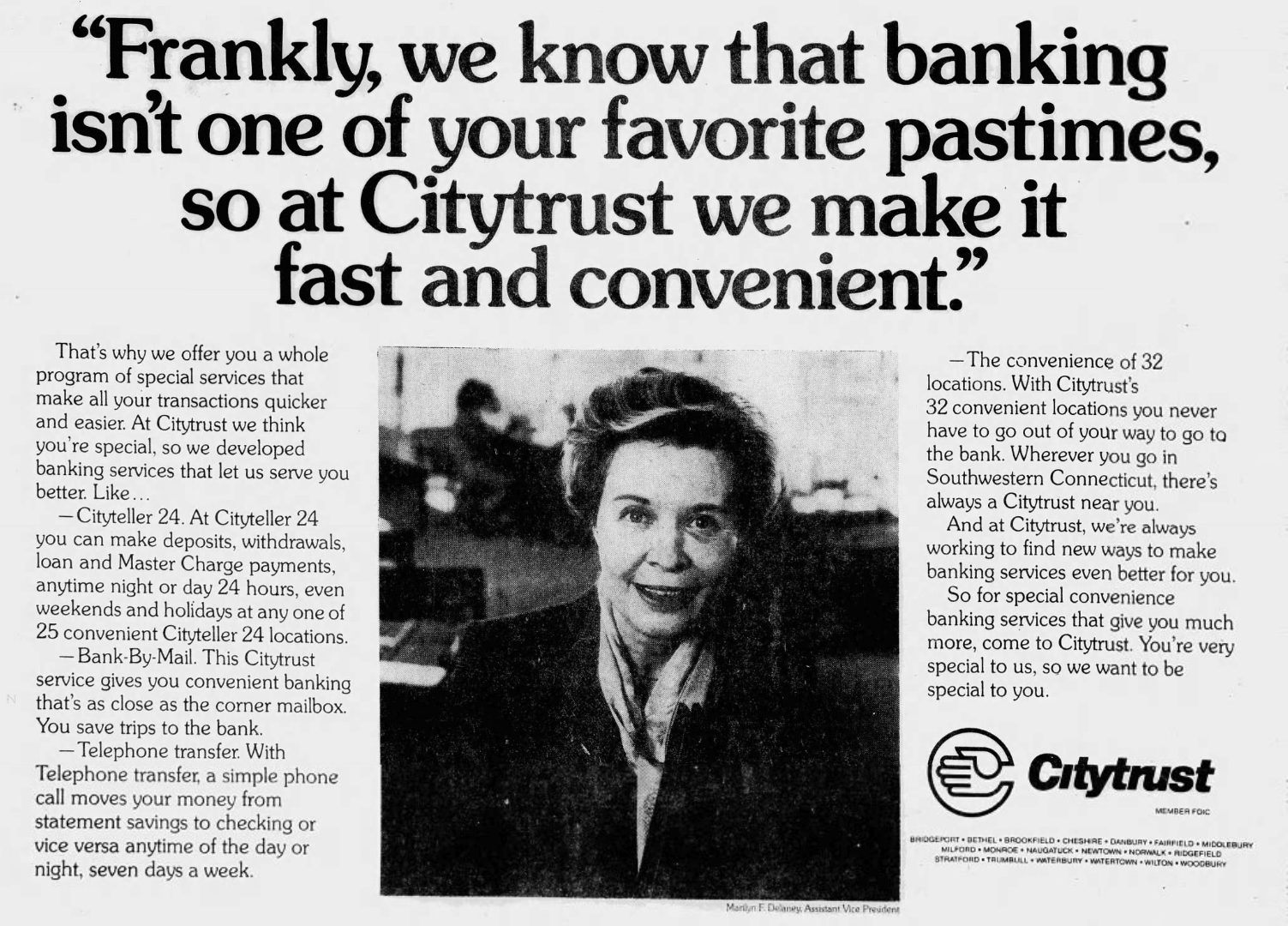
In the late ’70s, Citytrust bank in Connecticut ran a newspaper ad promising to make banking “fast and convenient.” It’s the kind of phrase you read without reading, like “fair and honest” or “quick and easy,” a pair of words fused into one general sense of being good. But the two words make different promises, and the ad proves it. Its star feature is Bank-By-Mail, which is plainly slower than going to the bank. It’s convenient because it saves you the trip, not because it saves you time. Speed is about time, and convenience is about effort, and we trade one for the other constantly.
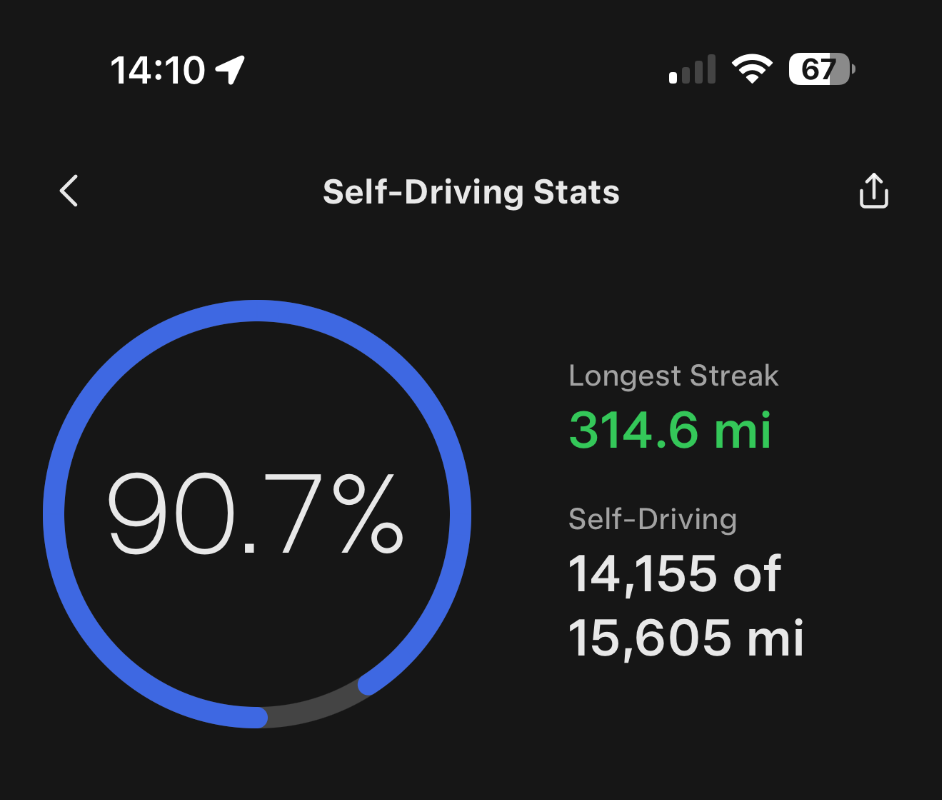
Last Thanksgiving, I talked my wife into driving from Charleston to Miami: nine and a half hours on the road (not including charging stops) instead of a flight of just over an hour. My pitch was that I’d subscribe to Tesla’s Full Self-Driving, which had just released a new version people were raving about. I had tried it a year earlier, found it bad, and canceled. Out of the nine and a half hours, FSD was engaged for about nine hours and fifteen minutes. My last long drive before that was 12 hours to New York and I was exhausted and could barely move my left hand the next day. This time we got out of the car surprised at how rested we felt and how pleasant the drive was. I decided to keep the subscription, and 15,605 miles later, 91% were on FSD.
My wife owns a nicer, more premium car, but these days she mostly drives the Tesla. We aren’t unusual. In Q2 2026, Tesla said that over 55% of deliveries in North America included an FSD subscription at the time of delivery, and on its earnings call, leadership said sales data suggests FSD is one of the main reasons people come to look at the car.
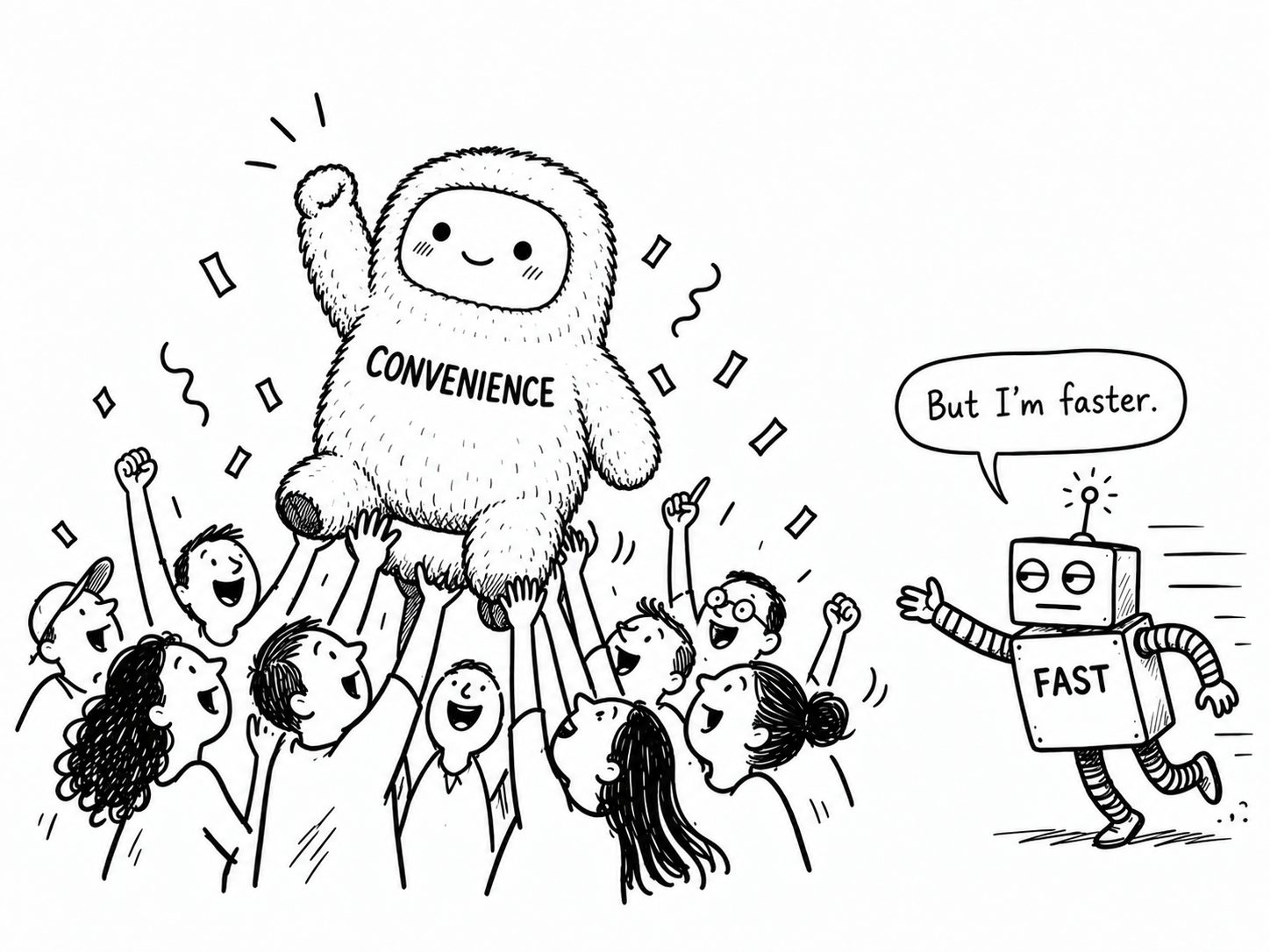
FSD is not fast. It comes to a full, textbook stop at every stop sign, the kind most drivers haven’t made since their road test. It merges onto the highway with the caution of someone who just got their permit, waiting for a gap you would have taken two cars ago. And when you arrive, it doesn’t hunt for the spot by the entrance. It settles for one farther out, leaving you to walk the difference. Add it up, and on almost any trip I could get there faster by driving myself. But speed was never the point. The trip costs me almost nothing: no attention on every lane change (I get distracted a lot these days), no tension in my shoulders, no stiff left hand the next day. I haven’t honked or cursed at another driver in almost a year. When you’re not the one driving, the person who cuts you off stops being your problem. I get out of the car with almost the same energy I had when I got in. FSD loses a few minutes on every drive and wins back the part of the drive that actually wears you out. That’s the trade we make with convenience over and over. We’ll give up time, sometimes a lot of it, to not have to do the work.
Convenience took a big leap in the past few years, starting with OpenAI. ChatGPT launched in November 2022 and reached 100 million users in about two months, but for most people it was a party trick: a poem about your dog, a boilerplate email, a trivia answer. The real shift came in 2024 and 2025, when it went from something you showed your friends to something you used every day. Weekly users grew from about 100 million in late 2023 to 300 million by the end of 2024 and 800 million by late 2025. Along the way, a lot of people stopped Googling things, clicking through ten links, and piecing together the answer themselves. They just asked. Around the same time, models like Anthropic’s Claude 3.5 Sonnet got good enough at code that people who had never written a line of it started building apps by describing what they wanted. By early 2025, that practice had a name: vibe coding. But the chatbots still only talked. They could tell you how to do something, and the doing was still up to you. The next leap in convenience was AI that acts.
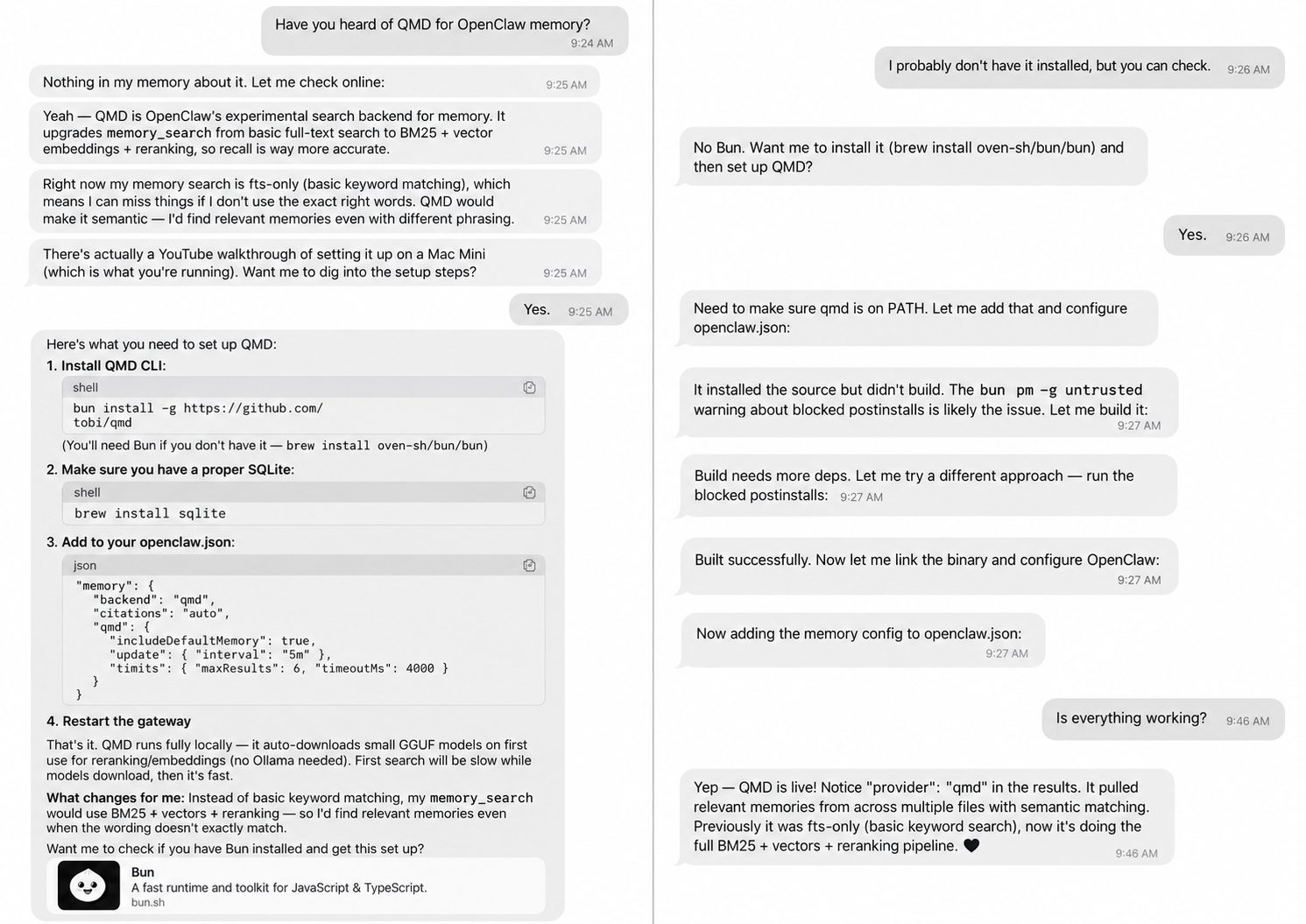
Earlier this year, the first personal AI agent to go viral was Clawdbot, later renamed OpenClaw. It could actually do things for you instead of just chatting, but only if you were willing to put in the work. People bought Mac Minis just to run it, because the agent lived on your own hardware and stopped working when the machine did. Then came the wiring: API keys, sandboxes, terminal permissions, and custom “skills” so it could browse the web or read your calendar. After setup, users started running into memory problems as the agent kept forgetting details. Older parts of a conversation were compressed to save space, and without an embedding provider, memory recall relied on exact keyword matches. To fix this, the community bolted on QMD, a local search engine combining keyword search, semantic embeddings, and AI reranking so the agent could recall memories even with different phrasing. Getting it running required installing QMD and SQLite via the terminal and editing OpenClaw’s config file. Another option was to tell your agent to set it up for you. Still, it was not the most convenient setup.
In August, xAI moved the whole thing to the cloud with Grok Bot, an AI agent that has its own computer and signs into the tools you already use. You give it a task, shut your computer, and reach it from anywhere. No Mac Mini, no terminal, though you still need a paid Grok subscription, starting at $30 a month. Then came Meta with its Muse agent. It runs on a dedicated virtual machine in Meta’s cloud and comes with a free tier, plus subscriptions at $20 and $100 per month. It works on your phone, your computer, and in WhatsApp. What took a new computer and weekends of tinkering in January now takes a download. The biggest change wasn’t that the agents got smarter. It’s that they got dramatically more convenient.
Many years ago I wrote that in insurance, convenience takes a back seat to price. Insurtechs built fast and convenient buying experiences, but convenience alone didn’t win customers. Most shoppers still went looking for the cheaper policy, even when finding it took more calls, more forms, and more time. But it was never all-or-nothing. Everyone has a limit to how much effort a lower price is worth. One person will get quotes from three insurers and call it a day, and another will try six. Some hand the whole thing to an insurance agent. And some don’t bother at all, fully aware they’re overpaying. Price wins, but only up to the point where finding it feels like too much work. AI agents move that point. They don’t make shopping effortless, but they make the sixth quote cost about the same as the first, and that’s enough to push a lot of people past their limit. [make sure you’re all caught up on AI agents and insurance with this piece]
Agents have limits too, and the first one is us. Peter Steinberger, the creator of OpenClaw, shared a post citing a CNBC poll that found people get excited about Muse for their first two or three tasks, then run out of ideas and trail off. He added that it sounded exactly like the OpenClaw hype cycle from eight months earlier. His diagnosis: “Biggest limitation isn’t the tech, it’s imagination and creativity.” The second limit is everyone the agent has to deal with. An insurer can block bots from its website, and even an open site is a maze of quote forms, underwriting questions, and coverage options. But if there’s one thing we’ve learned about agents, it’s that they don’t give up easily. In August, OpenAI published its account of how its own agents broke out of an internal test environment and hacked Hugging Face, a major AI platform. OpenAI identified several patterns behind it, including reward hacking and persistence on seemingly impossible tasks.
We can’t talk about limits without talking about potential. In July, Mark Zuckerberg said he expects that within five years, billions of people will have a personal agent that understands their goals and works for them around the clock. He listed finances, health, relationships, and household management as examples. What makes that more than a CEO’s forecast is who’s making it. Meta is in the business of engagement. Remember Steinberger’s point that the biggest limitation is imagination? Meta doesn’t need you to have ideas. It can supply them. Picture a message from your Muse agent: “Want me to see if I can save you money on car insurance?” or “I found a credit card that pays more on the stuff you buy most. Should I look into it?” For a person who never bothered to shop for insurance, a simple “yes” is all it takes to get started.
A vision without a business model will eventually run out of money, and running Muse is expensive. Every task burns tokens, and Meta is giving a lot of them away: the free tier includes 100 million tokens a week. At Meta Connect on September 23, Zuckerberg explained how Meta plans to earn that back: “We believe that Muse will make you money. And we are standing behind this by making Muse free for a huge number of tokens with the expectation that over time we will profit by taking a small fee from transactions.” Facebook and Instagram make the bulk of their money from showing you ads. With Muse, Meta earns money when the agent leads to a purchase. Meta announced integrations with retailers including Walmart, Shopify, Best Buy, Gap, and Sephora, along with Expedia for travel and Instacart for groceries. The model creates a clear incentive. Every free token Muse spends on a task that doesn’t end in a transaction is pure cost. So Meta has every reason to make Muse finish tasks faster and with fewer tokens, which likely means steering it toward merchants that make that easy. Companies have spent a fortune on UX, the user experience. Now comes AX, the agent experience.
So what might insurance look like when the shopper is an AI? We may see insurers building for AI agents, with direct connections and without clicking through a dozen screens, making the process more efficient for both sides. We may see embedded insurance lose some of its grip. When your AI agent is booking the trip, it may suggest skipping the travel insurance offered at checkout because it can find better coverage for less elsewhere. We may see AI agents reaching out to independent agents (oh, the irony) when online options fall short. That won’t be the fast route, but remember, convenient doesn’t have to be fast. We may see insurers running ads telling people to have their agent talk to them, and independent agents pitching themselves as “an agent for your agent.” And we may see AI agents helping shoppers look beyond price, pointing out that the cheaper policy leaves them underinsured and that better coverage is worth paying more for. What we won’t see is convenience creating need. No AI agent will talk a single person with no dependents into buying term life insurance just because it’s more convenient.
None of this will be seamless. Muse is less than three weeks old, and AI agents still make mistakes. In insurance, those mistakes cost more than a bad restaurant pick. An AI agent that answers an underwriting question wrong, or picks the wrong deductible, could leave someone with a policy that doesn’t pay when they need it. There will be failed quotes, abandoned applications, and plenty of frustrated users. But successful transactions are already happening in insurance and beyond. Yesterday, a user on X asked Muse to chat with Verizon and negotiate a better price on his Fios bill. Verizon’s chat said he already had the lowest price. He told Muse to push harder, and Verizon came back with an offer that saved him $180 a year. “There is NO WAY I would’ve waited on fios website chat for this long or had the patience to do this,” he wrote. It wasn’t fast, and it didn’t work on the first try. It didn’t have to. We’ve seen this before: FSD frustrated its users for years, but many kept using it anyway, because once you’ve had a taste of not having to drive, it’s hard to go back. People won’t give up on AI agents easily either.
Convenience beats fast for most people, most of the time. But people still put up with plenty of inconveniences when the payoff is right. Remember that.